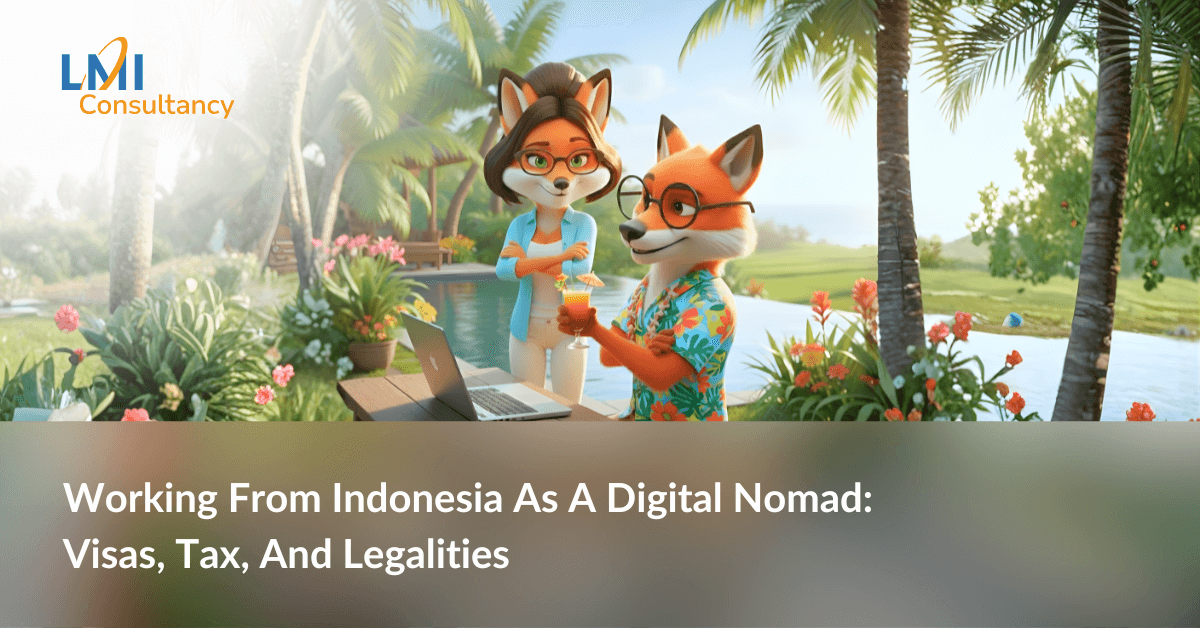
Indonesia has quietly emerged as one of the world’s most sought-after refuges for digital nomads, remote workers, and location-independent professionals.
In Bali, where surfboards lean against laptop-filled cafés and evenings stretch into conversations beneath slow-moving tropical skies, the meaning of “work-life balance” has taken on an entirely new form.
For many modern professionals, the pandemic-era shift to remote work redefined Indonesia not merely as a bucket-list destination but as a viable long-term base.
By 2025, that shift became more formalized when the government began to offer a digital nomad visa, officially known as the Remote Worker Visa (Index E33G). This type of visa effectively offers digital nomads a clearer and more structured path for foreigners who wish to make Indonesia their home while working for employers abroad.
Unlike the traditional tourist visa, which limits the length of stay and restricts any income-generating activity inside the country, the Remote Worker Visa serves as a legal residence permit for those whose livelihood comes from outside Indonesia.
In effect, it establishes a legitimate framework for digital nomads to live, work, and remain compliant with national regulations while enjoying the country’s coastlines and cultural richness.
In this guide, LMI Consultancy outlines what every remote professional needs to know about Indonesia’s new visa for digital nomads.
Who Is a Digital Nomad?
A digital nomad is someone who earns income remotely, typically online, without being tied to a physical office or location. They may be freelancers, tech professionals, marketers, designers, startup founders, entrepreneurs, or employees of overseas companies.
Digital nomads choose Indonesia not only for its natural scenery and culture, but for:
- Affordable cost of living
- Reliable internet in major hubs
- A strong café and co-working ecosystem
- Global networking opportunities
- Established expatriate communities
- Access to islands, nature, and wellness activities
In 2024–2025, remote workers formed one of Indonesia’s fastest-growing expatriate groups, driven by global shifts toward flexible work and Indonesia’s improved immigration framework.
What Is an Indonesian Digital Nomad Visa?
Indonesia’s Digital Nomad Visa generally refers to a residence permit that allows remote workers to live in Indonesia legally while earning income from outside Indonesia. The intention is to provide foreigners with clarity, compliance, and a structured stay without relying on tourist visas.
Digital Nomad Visa = Remote Worker Visa (Index E33G)
This visa allows remote professionals to remain in Indonesia long-term while maintaining foreign employment.
Understanding The Indonesia Remote Worker Visa (Index E33G)
Introduced to support Indonesia’s status as a global hub for remote work, the E33G Remote Worker Visa is designed for foreigners who meet these criteria:
- Work for a company based outside Indonesia
- Earn income from outside Indonesia
- Intend to live in Indonesia for medium- or long-term periods
- Not engage in local employment or local business activities
The E33G visa can be issued as:
- Single Entry (short-term stay)
- Limited Stay Permit (KITAS) for 6 months, 1 year, or 2 years
It offers the benefit of residency, legal clarity, and an official status aligned with Indonesia’s evolving digital economy.
Also read:
Izin Tinggal Terbatas ITAS & KITAS : Guide to Limited Stay Permit in Indonesia
How to Extend Your Visa in Bali? Guide to Indonesia Visa Extension 2025
Digital Nomad Visa VS Tourist Visa
| Digital Nomad Visa (E33G) | Tourist Visa (B1, B2) |
| Legal to live in Indonesia while working for an overseas employer | Only allowed for short-term visits |
| Allows long-term stays (6–24 months) | Maximum stay 60 days per entry (depending on visa) |
| Requires proof of remote employment | No income-related documentation |
| Eligible for residency permits | Not eligible for KITAS |
| More stable and compliant | Subject to frequent renewals |
Digital nomads who choose to stay on tourist visas often face complications, including frequent renewals, unclear legal status, and possible questioning by immigration officers. The E33G removes this uncertainty.
Eligibility Criteria For a Digital Nomad Visa
Applicants must meet the following criteria:
- Hold a valid passport with at least 12 months validity
- Proof of employment or business based outside Indonesia
- Minimum income requirement (varies by year and immigration policy)
- Clean criminal record
- Health insurance covering the duration of stay
- Financial capability to support living expenses
- Not engaging in any income-generating activities within Indonesia
Digital Nomad Visa Application Process
The process is fully online through Indonesia’s immigration system. LMI Consultancy handles end-to-end processing for all applicants.
Step 1: Consultation and Eligibility Screening
Your documents and employment status are screened to ensure compliance with the E33G category.
Step 2: Document Preparation
Required documents are compiled, translated if needed, and formatted for submission.
Step 3: Online Application Submission
Your visa application is submitted to Indonesia’s Immigration Directorate via the official portal.
Step 4: Approval and Payment
Upon approval, you receive an e-visa that allows entry into Indonesia.
Step 5: Arrival and KITAS Processing (if applicable)
If applying for a long-term E33G stay, your KITAS will be issued after biometrics at the immigration office.
Remote Worker Visa Requirements
Typical documentation required includes:
- Passport scan
- Recent photograph
- Proof of remote employment (contract or employer letter)
- Company registration documents of your employer (foreign entity)
- Bank statements or proof of funds
- Health insurance
- CV or resume
- Return ticket (optional but recommended)
- Statement of compliance with Indonesian regulations
Requirements may differ depending on the visa duration.
Tax Obligations for Digital Nomads in Indonesia
Taxation depends on tax residency status, not visa type.
You become a tax resident if you:
- Stay in Indonesia for at least 183 days in a 12-month period, or
- Reside in Indonesia with the intention to remain
Tax residents must declare their global income to the Directorate General of Taxes (DGT).
Non-tax residents, however, are only taxed on income sourced from Indonesia.
Because digital nomads under the E33G visa earn income from abroad, they typically fall into:
- Tax resident, foreign income declared but not taxed due to foreign tax credits, or
- Non-tax resident, no tax obligation in Indonesia
It is crucial to analyse your personal timeline and financial structure. LMI Consultancy provides tax assessments to ensure you remain compliant without overpaying tax.
Frequently Asked Questions
How Long Does It Take to Get a Visa?
Processing typically takes 5–15 working days, depending on document readiness and immigration queues.
How Long Can I Stay in Indonesia as a Digital Nomad?
The Remote Worker Visa allows stays from 6 months up to 2 years, depending on the permit chosen.
How Much Does it Cost to Get a Visa?
Costs vary depending on the type of permit (single entry or KITAS). Fees range from USD 150 to USD 1,500 depending on the duration and structure.
Can I Bring Family Members?
Yes. Spouses and children can enter under a Dependent KITAS linked to the primary E33G holder.
What Are the Common Reasons for Visa Denial?
- Employment documents incomplete
- Income unverifiable
- Employer not registered abroad
- Criminal record detected
- Incorrect visa category chosen
Do I Have To Pay Taxes in Indonesia?
You must assess your stay duration. Tax obligations arise only after you become a tax resident.
What Type of Work Can I Do?
Any remote work for a foreign company or foreign client is permitted.
You cannot earn income from Indonesian clients or employers.
Apply for a Digital Nomad Visa with LMI Consultancy
As Indonesia’s leading business and immigration consultancy, LMI Consultancy provides:
- Eligibility screening
- End-to-end visa processing
- KITAS & residence permits
- Tax advisory for digital nomads
- Document assistance and compliance checks
With thousands of clients served and a reputation for transparency, speed, and accuracy, LMI Consultancy ensures your move to Indonesia is smooth, legal, and stress-free.
Start your Digital Nomad Visa process today. Work remotely from Indonesia with confidence, clarity, and full legal compliance; supported by LMI Consultancy.