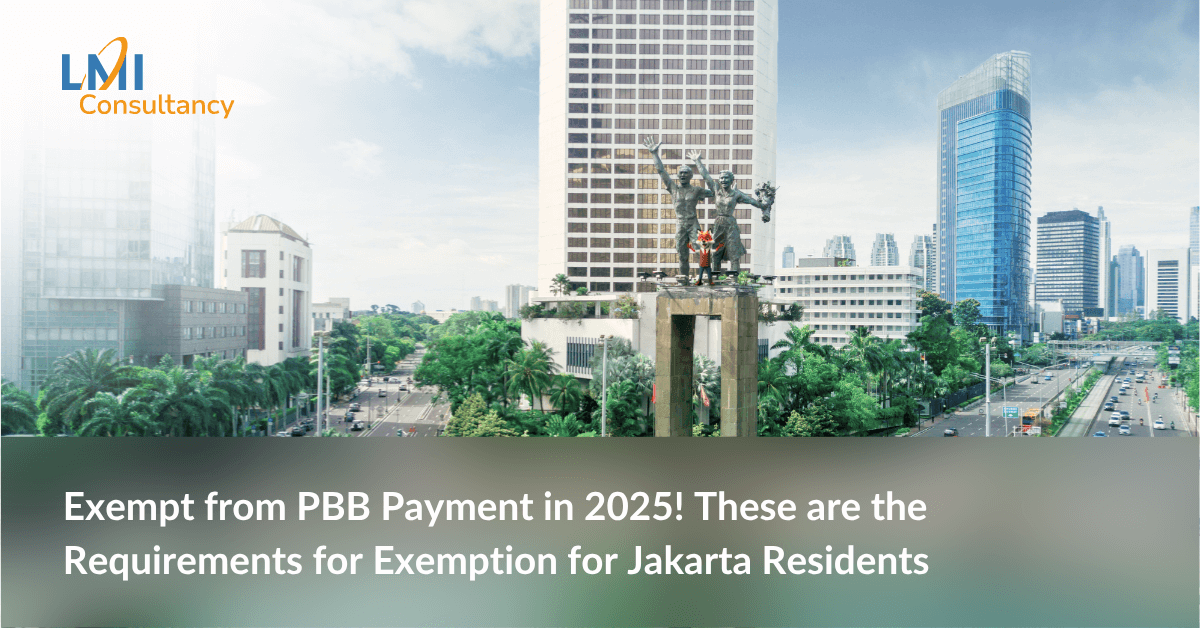
Land and Building Tax (PBB) is a very important source of regional original income (PAD) for the DKI Jakarta Provincial Government.
The money obtained from the SPPT PBB-P2 is used to pay for various development programs and public services that are crucial for all Jakarta residents.
However, the DKI Jakarta Provincial Government understands that not all taxpayers have the same ability to fulfill their tax obligations.
Therefore, various online PBB tax exemption policies have been implemented to reduce the burden on the community, especially for vulnerable groups and property owners with low taxable object sales value (NJOP).
Why is there a PBB exemption? Here are the reasons.
The updating of the PBB Tax exemption policy is not a regular government program, but rather part of an inclusive development strategy. Some of the key reasons behind this policy are:
Easing the Economic Burden on the Community
Inflation and the ever-increasing cost of living can be a burden on people, especially those with low or irregular incomes.
The exemption of PBB-P2 in Jakarta can reduce their routine expenses, so that funds can be allocated for other basic needs.
Promoting Social Justice
The 2025 PBB tax exemption ensures that low-income citizens or those with modest property are not disproportionately burdened by taxes. This aligns with the principle of distributive justice, where the tax burden is adjusted to the taxpayer’s economic capacity.
Protecting Vulnerable Groups
Seniors, retirees, veterans, and people with disabilities often face financial constraints. The UN’s exemption policy provides financial protection for them, ensuring they can remain in their homes without additional worries.
Economic Stimulus (in Certain Cases)
Although the primary focus of PBB exemptions in Jakarta is social justice, in some contexts, tax exemptions can also serve as an incentive for investment or development in certain sectors, although this is not the primary purpose for housing PBB.
Spatial Planning and Land Ownership
Kebijakan pembebasan PBB juga dapat digunakan sebagai alat untuk meningkatkan kesadaran dalam menghormati regulasi tata ruang atau untuk mendata kepemilikan lahan yang lebih tepat.
Development of the Land and Building Tax Exemption Policy in DKI Jakarta
The land and building tax (PBB) exemption policy outlined in the SPPT PBB-P2 (land and building tax) in DKI Jakarta has undergone various changes over time. Since the implementation of regional autonomy, the DKI Jakarta provincial government has had full authority to set PBB rates and policies.
Initially, PBB exemptions were more case-specific, but in recent years, the DKI Jakarta Provincial Government has proactively issued more comprehensive regulations for PBB exemptions.
One of the most important is the PBB exemption policy for taxable objects with a taxable selling value (NJOP) below a certain threshold. This policy aims to protect low-income individuals who own modest properties.
In addition, the Jakarta Special Capital Region (DKI) Provincial Government is paying special attention to certain groups, such as retirees, veterans, and people with disabilities, who are deemed eligible for PBB exemptions. This demonstrates the government’s appreciation and concern for their services.
The Latest PBB Exemption Policy by the DKI Jakarta Provincial Government
Currently, the Jakarta Provincial Government has several principal PBB-P2 exemption schemes in effect. It’s important to note that policy details are subject to change over time through gubernatorial regulations or new regional regulations. In general, the PBB tax exemption schemes in Jakarta include:
1. PBB Exemption for NJOP Below a Certain Limit
This policy reaches a wide range of taxpayers, allowing properties with a Taxable Object Sales Value (NJOP) below a certain threshold to receive a full PBB (land and building tax) exemption. This NJOP threshold is periodically adjusted by the Jakarta Provincial Government to exempt low and middle-income households with modest homes from PBB obligations.
2. PBB Exemption for Veterans, Pensioners, Independence Pioneers, and National Heroes
To recognize their service, veterans, retirees, independence pioneers, and national heroes receive a PBB exemption on the property they occupy as their residence. This policy reflects the Jakarta Provincial Government’s commitment to ensuring their well-being in old age.
3. Tax Exemption for Persons with Disabilities
The DKI Jakarta Provincial Government also shows its concern for people with disabilities by providing PBB exemptions for the properties they live in, aiming to ease their financial burden.
4. PBB Exemption for Elderly Taxpayers
The Jakarta Provincial Government is also focusing on elderly taxpayers. Property tax (PBB) exemptions are provided to seniors with certain conditions, often linked to property’s NJOP (New Property Value Added Tax), to help them face old age without additional financial stress.
5. PBB Exemption for Places of Worship and Other Public Facilities
Properties used for places of worship and other non-profit public facilities are also exempt from PBB. This policy is based on the principle that such properties provide social and public benefits.
Procedures and Conditions for Principal Exemption PBB-P2
Although some PBB exemptions may be granted automatically (for example for NJOP below a certain limit), for some other categories, the taxpayer’s decision may require an application.
Procedures and requirements may vary depending on the type of exemption. However, in general, the documents often required include:
- Photocopy of Taxpayer’s ID card/Identity Card.
- Photocopy of the Current Year’s PBB SPPT.
- Photocopy of Proof of Property Ownership (Land Certificate/Sale and Purchase Deed).
- Certificate from an Authorized Agency (for example, a veteran’s certificate from the Ministry of Defense, a disability certificate from social services, or a pension certificate).
- PBB Release Request Letter.
- Statement Letter (if required).
Applications are usually submitted to the DKI Jakarta Regional Revenue Agency (Bapenda) or the local PBB service office.
It is important for taxpayers to always check the latest information on the official Bapenda DKI Jakarta website or contact their information service process for the most accurate guidance to be verified immediately.
Impact of Land and Building Tax Exemption Policy
The PBB exemption policy in DKI Jakarta has significant impacts, both positive and negative.
Positive impact
Improving Community Welfare: Directly easing the economic burden on thousands, even millions of Jakarta residents, especially those who are financially vulnerable.
Improving Tax Compliance: Despite the exemption, this policy can indirectly increase taxpayer awareness and compliance overall due to the sense of fairness in the tax system.
Caring Government Image: Demonstrates that the DKI Jakarta Provincial Government is a government that is responsive to the needs of its citizens and committed to social justice.
Preventing Evictions Due to Tax Failure: For low-income residents, burdensome property taxes (PBB) can trigger financial hardship, leading to potential property loss. A PBB exemption helps prevent this scenario.
Negative Impacts (or Challenges)
Potential Reduction in Locally-Generated Revenue (PAD): The exemption from PBB will certainly reduce the potential for local revenue from the PBB sector. However, this reduction is considered a social cost commensurate with the benefits.
Potential for Abuse (Although Rare): While rare, there is potential for abuse or attempts to obtain unauthorized releases. Therefore, rigorous data verification is essential.
Administrative Complexity: Managing a vast UN relief program requires a robust administrative system and adequate human resources.
This policy not only helps maintain household economic stability but also strengthens the bond between the government and its citizens by demonstrating empathy and concern. It is important for Jakarta residents to continue monitoring official information from the Jakarta Regional Revenue Agency (Bapenda) to exercise their rights regarding PBB exemptions and contribute to the development of a more inclusive and equitable Jakarta.
Our experienced consultants will guide you from initial document preparation to signing the final agreement. Our team is ready to assist you at every step of your home loan application. Contact LMI Consultancy today!