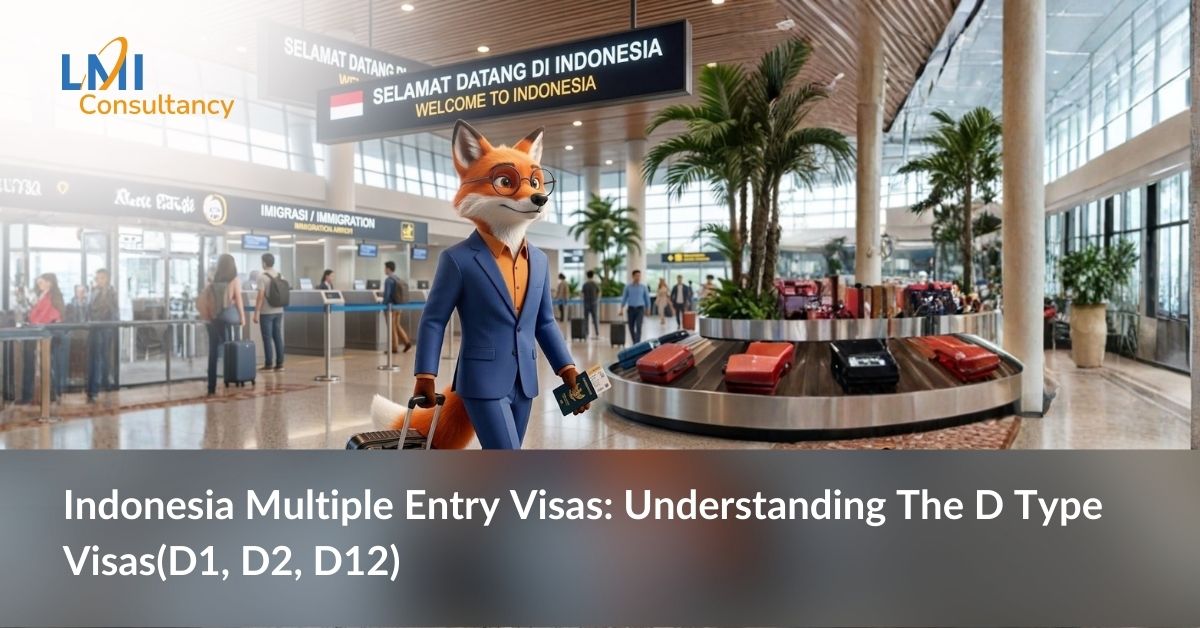
For frequent travelers, investors, and professionals who maintain ongoing ties Indonesia Multiple Entry Visas provide a practical alternative to repeatedly applying for short-term visas before each trip. The D-Type visa system enables eligible applicants to travel to Indonesia regularly while maintaining compliance with Indonesian immigration regulations.
In this guide, we explain how Multiple Entry Visas in Indonesia work, the key differences between the D1, D2, and D12 visa indexes, and the types of activities permitted under each category.
What is a Multiple Entry Visa Indonesia?
A Multiple Entry Visa Indonesia is a visa category that allows foreign nationals to exit and re-enter Indonesia several times during the visa’s validity period without submitting a new visa application before each visit.
Unlike single-entry visas, which become invalid once the traveler leaves the country, a multiple entry visa allows the holder to return to Indonesia repeatedly for approved purposes such as tourism, business activities, or investment exploration.
However, while the visa itself may remain valid for an extended period, each visit typically has a maximum stay duration, after which the visa holder must exit Indonesia before returning again.
Multiple Entry Visas are generally used by individuals who:
- Travel to Indonesia regularly for business or investment discussions
- Maintain commercial partnerships or professional relationships in Indonesia
- Conduct market research or business development activities
- Visit Indonesia frequently for tourism purposes
These visas are issued through Indonesia’s electronic visa system and must comply with immigration and regulatory requirements set by Indonesian authorities.
Types of Multiple Entry Visas to Enter Indonesia
Indonesia currently offers several Multiple Entry Visa indexes designed for different travel purposes. The most common include:
- Index D1 – Multiple Entry Tourist Visa
- Index D2 – Multiple Entry Business Visa
- Index D12 – Multiple Pre-Investment Visa
Each visa category serves a distinct purpose and allows specific activities during the holder’s visits to Indonesia.
Index D1: Multiple Entry Tourist Visa
The Index D1 visa is designed for foreign travelers who wish to visit Indonesia frequently for tourism purposes.
This visa is particularly useful for travelers who regularly visit Indonesia but do not intend to stay long-term in the country during each visit.
Typical activities permitted under the D1 Multiple Entry Tourist Visa include:
- Tourism and leisure travel
- Visiting friends or family
- Attending cultural or social events
- Exploring Indonesia’s destinations over multiple trips
While the visa allows travelers to enter Indonesia multiple times during the visa validity period, it does not allow the holder to work or engage in income-generating activities.
The D1 visa provides flexibility for frequent travelers who want to avoid applying for a new tourist visa each time they visit Indonesia.
Index D2: Multiple Entry Business Visa
The Index D2 visa, commonly known as the Multiple Entry Business Visa Indonesia, is intended for foreign nationals who need to visit Indonesia regularly for professional or commercial reasons.
This visa is commonly used by:
- International business executives
- Entrepreneurs developing partnerships in Indonesia
- Corporate representatives managing regional operations
- Investors exploring commercial opportunities
Typical activities permitted under the D2 Business Visa include:
- Attending business meetings
- Participating in conferences, seminars, or industry events
- Conducting market research
- Negotiating business partnerships
- Visiting Indonesian companies and partners
However, it is important to note that the Multiple Entry Business Visa does not allow the holder to work in Indonesia or receive salary from an Indonesian company. Individuals who intend to work in the country must obtain the appropriate Work visa or KITAS.
Index D12: Multiple Pre-Investment Visa
Indonesia introduced the Index D12 visa to facilitate foreign investment exploration in the country.
The Multiple Pre-Investment Visa is specifically designed for foreign nationals who plan to explore investment opportunities or evaluate potential business ventures before formally establishing a company in Indonesia.
Activities allowed under the D12 visa typically include:
- Conducting feasibility studies
- Meeting potential local partners
- Visiting project locations
- Exploring investment opportunities
- Preparing for company establishment
The D12 visa is often used by individuals considering setting up a PT PMA (foreign investment company) in Indonesia.
By allowing multiple visits during the visa’s validity period, the visa enables investors to carry out preliminary activities before committing to establishing a business.
Multiple Entry Visa Validity
The validity of a Multiple Entry Visa Indonesia depends on the specific visa index issued by immigration authorities.
Typically, these visas may be granted with validity periods of up to several years, allowing visa holders to enter Indonesia multiple times during that period.
However, it is important to note that:
- Each visit generally has a maximum stay period (commonly up to 60 days per entry).
- Visa holders must leave Indonesia once the permitted stay period expires.
- The visa itself remains valid for re-entry as long as it is still within the visa validity period.
Travelers should always verify their permitted stay period and comply with immigration rules to avoid overstaying penalties.
Allowed Activities under Multiple Entry Visa
The activities permitted under a Multiple Entry Visa Indonesia depend on the visa index category.
Generally permitted activities include:
- Tourism and cultural visits (D1)
- Attending business meetings or networking events (D2)
- Participating in conferences, seminars, and industry gatherings (D2)
- Conducting investment exploration and market research (D12)
- Meeting business partners and developing commercial opportunities (D2 or D12)
However, visa holders must not engage in employment or income-generating work in Indonesia unless they hold a valid Work visa or KITAS issued through proper immigration channels.
Common Questions
Can I use a Single Entry Business Visa instead?
Yes. A Single Entry Business Visa is suitable for individuals who plan to remain in Indonesia for a longer, uninterrupted stay during a single visit. However, once the visa holder leaves Indonesia, the visa becomes invalid, and a new visa must be issued before returning.
In contrast, a Multiple Entry Visa Indonesia allows travelers to enter and exit the country multiple times during its validity.
Can I start a business in Indonesia with a multiple entry visa?
A Multiple Entry Visa may allow you to explore business in Indonesia, conduct meetings, or evaluate investment opportunities. However, it does not permit operating a business directly.
To formally operate a business, foreign investors typically establish a PT PMA, which is the legal structure for foreign investment companies in Indonesia.
Does this visa allow me to work in Indonesia?
No. Multiple Entry Visas do not function as a Work visa. Individuals intending to work in Indonesia must obtain the appropriate work permit and residence permit.
Can investors apply for a different visa if they plan to establish a company?
Yes. Foreign Investors planning to operate a business in Indonesia may apply for an Investor KITAS after establishing their company.
This residence permit allows investors to legally stay in Indonesia while managing their investment in a PT PMA.
Can family members join the visa holder?
In many cases, family members may apply for a Dependant visa linked to the primary visa holder if they later obtain a residence permit, such as a KITAS.
Do I need a sponsor to apply for a Multiple Entry Business Visa (MEBV) in Indonesia?
Yes. To apply for a Multiple Entry Business Visa (MEBV) Indonesia, the applicant must be sponsored by a local sponsor, typically a registered company in Indonesia. The sponsor plays an important role in the visa application process by providing the required supporting documents and confirming the purpose of the applicant’s visit.
What compliance rules should travelers be aware of?
Foreign nationals must ensure their activities remain within the scope of the visa issued. Immigration compliance is strictly enforced in Indonesia, and violations such as unauthorized employment may result in penalties or visa cancellation.
Document Requirements to Apply for Multiple Entry Visa Indonesia
Applicants for a Multiple Entry Visa Indonesia must typically submit the following documents:
- A valid passport with sufficient remaining validity
- A recent photograph
- Sponsorship or invitation documentation (for business or investment visas)
- Travel itinerary or explanation of visit purpose
- Supporting documents relevant to the visa category
Additional documentation may be required depending on the visa index, nationality of the applicant, and immigration review procedures.
Applicants should ensure all documentation is accurate and complete to avoid delays during the visa application process.
Single Entry Visit Visa Indonesia
If you plan to stay longer in Indonesia during one visit, the Single Entry Visa Indonesia may be a suitable option. This visa allows a total stay of up to 180 days, depending on the extensions granted during your visit.
Learn more about this visa
Get The Right Indonesia Visa for Your Trip with LMI Consultancy
Choosing the correct visa is essential for ensuring compliance with Indonesian immigration regulations and avoiding unnecessary delays when entering the country. Immigration policies can evolve regularly, which is why staying informed about the latest visa updates is important before planning your trip to Indonesia.
As a professional visa agency in Indonesia, LMI Consultancy provides comprehensive support for expatriates, investors, and international travelers navigating the country’s visa framework. Our team assists with visa applications, immigration compliance, and company establishment services for individuals planning to live, invest, or conduct business in Indonesia.
By working with an experienced visa agency that closely monitors Indonesian visa updates, travelers and businesses can ensure their applications follow the correct procedures while minimizing delays or compliance risks.