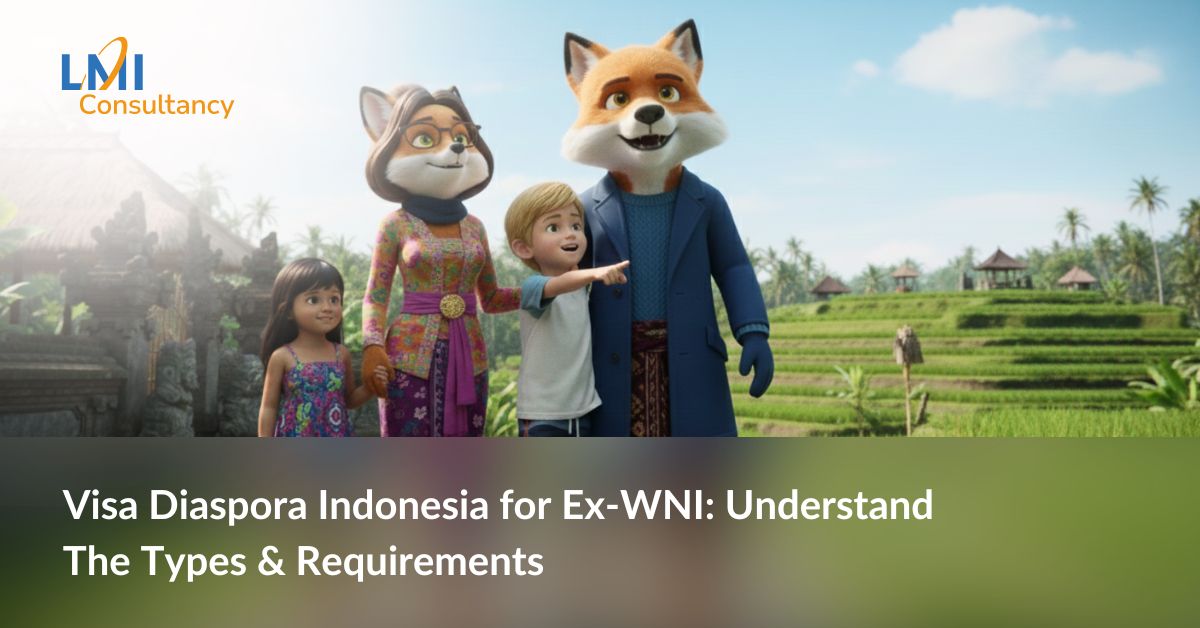
If you were once an Indonesian citizen (Warga Negara Indonesia) or were born to Indonesian parents but no longer hold Indonesian nationality, returning to Indonesia is no longer limited to short-term visits or standard tourist visas.
Indonesia has introduced diaspora-focused visa and residency pathways designed to reconnect former Indonesian citizens (ex-WNI), descendants of Indonesians, and overseas Indonesians with strong ties to the country.
These pathways provide structured, lawful options to visit, reside, and in certain cases settle long-term in Indonesia, without requiring reacquisition of citizenship.
What Is Visa Diaspora in Indonesia?
A Visa for Diaspora Indonesia refers to a category of immigration facilities granted to foreign nationals who have blood lineage, historical, or long-standing ties to Indonesia, particularly:
- Former Indonesian citizens (ex-WNI)
- Children or grandchildren of Indonesian citizens
- Overseas Indonesians who have maintained cultural, familial, or economic links to Indonesia
Rather than functioning as a single visa type, “diaspora visa” is an umbrella term covering several stay permits (ITAS/ITAP) and policy instruments, including newer frameworks such as the Global Citizenship of Indonesia (GCI), that aim to accommodate Indonesia’s global diaspora.
Legal and Regulatory Basis for Diaspora Visas in Indonesia
Indonesia’s diaspora visa and residency framework is grounded in several layers of immigration regulation, including:
- Law No. 6 of 2011 on Immigration, which governs visas, stay permits, and permanent residency
- Government Regulations and Ministerial Regulations issued by the Directorate General of Immigration
- Policy instruments and circulars addressing descendants, repatriation, and special stay permits
- The introduction of Global Citizenship of Indonesia (GCI) as a policy response to dual-citizenship limitations
Who Is Eligible for a Visa Diaspora Indonesia?
Eligibility for a diaspora-related visa or residency permit generally includes the following profiles:
- Ex-WNI (Former Indonesian Citizens) – Individuals who previously held Indonesian citizenship and later naturalized abroad.
- Descendants of Indonesian Citizens – Foreign nationals with Indonesian parents, grandparents, or lineage supported by civil documentation.
- Overseas Indonesians With Strong Ties – Individuals who may not qualify as descendants but demonstrate sustained cultural, familial, or historical links.
- Applicants Under the Global Citizenship of Indonesia (GCI) Scheme – Individuals assessed under broader “ties to Indonesia” criteria.
- Eligibility is assessed on a case-by-case basis, with emphasis on documentary evidence and legal traceability.
Requirements and Eligibility to Apply for Diaspora Visa
While requirements may vary depending on the specific visa category or stay permit (ITAS, ITAP, or other diaspora-related pathways), applicants are generally required to prepare the following documentation:
- A valid foreign passport with a minimum remaining validity of 18 months at the time of application
- Proof of former Indonesian citizenship (for ex-WNI), such as previous Indonesian passports, citizenship decrees, or other official government records
- Lineage documentation for descendants of Indonesian citizens, including birth certificates, family cards, and marriage certificates, establishes a direct familial link
- An Indonesian sponsor, where applicable, in accordance with prevailing immigration regulations
- Evidence of financial capability to support the intended stay in Indonesia
- A clean immigration history and criminal record, as required by the Immigration authorities
- Additional supporting documents, which may be requested by Immigration on a case-by-case basis
Accuracy and consistency across all submitted documents are essential, as discrepancies or incomplete records may result in processing delays, additional clarification requests, or application rejection.
How to Apply for a Diaspora Visa in Indonesia: Application Process
Eligibility Assessment
Determining the most appropriate visa or stay permit (ITAS, ITAP, or GCI-linked pathway).
Document Compilation and Legal Verification
Reviewing and legalizing foreign documents where necessary.
Visa or Stay Permit Submission
Filing applications through the Indonesian Immigration system or overseas missions.
Immigration Review and Approval
Immigration authorities assess eligibility, documentation, and compliance.
Entry and Stay Permit Issuance
Upon approval, applicants may enter Indonesia and are required to complete post-arrival reporting within 90 days in accordance with Indonesian immigration procedures.
Depending on the visa or stay permit granted, applicants may also be subject to exit and re-entry regulations that must be observed to maintain lawful immigration status.
Also Read: Repatriation KITAS from LMI Consultancy
Given the procedural complexity, particularly for cases involving lineage verification or former Indonesian citizenship, professional guidance plays a critical role in reducing processing risks and ensuring ongoing compliance throughout the stay period.
Benefits of a Diaspora Visa in Indonesia for Descendants and Overseas Indonesians
For ex-WNI and overseas Indonesians, diaspora visas offer substantial advantages, including:
- Living longer and renewable stays compared to tourist visas
- Legal residency certainty without violating immigration rules
- Easier family reunification in Indonesia
- Improved access to property use rights, banking, and local services (subject to regulations)
- A formal pathway toward permanent residency in qualifying cases
These benefits allow diaspora members to maintain a meaningful presence in Indonesia without renouncing their foreign nationality.
The Global Citizenship of Indonesia (GCI): A New Policy Framework Supporting the Indonesian Diaspora
The Global Citizenship of Indonesia (GCI) represents a significant evolution in Indonesia’s immigration and diaspora engagement strategy. Introduced by the Indonesian Government as a response to long-standing dual-citizenship constraints, GCI reflects a renewed commitment to strengthening ties with the Indonesian diaspora, particularly those living abroad for at least a sustained period and maintaining strong connections to Indonesia. Under this framework, GCI grants eligible individuals a set of privileged residency rights, including:
- Indefinite or long-term stay permits, offering stability beyond conventional visa categories
- Formal recognition of blood, kinship, and historical ties to Indonesia
- The ability to retain foreign nationality, with no requirement to relinquish existing citizenship
By design, GCI aims to simplify access to lawful residency for members of the Indonesian diaspora who wish to return, reside, or invest in Indonesia. More broadly, the policy encourages diaspora participation in contributing to Indonesia’s development, particularly through knowledge transfer, economic activity, and long-term engagement.
Also read: Guide to Global Citizenship of Indonesia – The New Visa Category Granting Unlimited Stay
Countries With Comparable Diaspora or Overseas Citizenship Programs
Indonesia’s diaspora framework aligns with international precedents adopted by several countries, including India’s Overseas Citizen of India (OCI) scheme, South Korea’s Overseas Korean (F-4) visa, Ireland’s citizenship-by-descent pathway, and the Philippines’ dual citizenship regime.
Collectively, these models illustrate how structured diaspora policies can support capital inflows, talent circulation, and long-term national engagement, objectives that Indonesia is increasingly incorporating into its own immigration and residency strategy.
How LMI Consultancy Indonesia Supports Diaspora Visa and Residency Applications
Indonesia’s diaspora visa framework reflects a broader national vision: reconnecting with its people beyond borders while maintaining legal clarity.
LMI Consultancy Indonesia offers comprehensive, end-to-end immigration support, covering:
- Eligibility assessment for former Indonesian citizens (ex-WNI), descendants, and Global Citizenship of Indonesia (GCI) applicants
- Verification of supporting documents and alignment with prevailing immigration regulations
- Sponsorship structuring, where applicable
- End-to-end management of visa, ITAS, ITAP, and GCI applications
- Ongoing compliance monitoring and immigration advisory services
Through the integration of regulatory insight, immigration expertise, and practical execution, LMI supports diaspora applicants in establishing lawful, efficient, and sustainable pathways to reside in Indonesia.