Indonesia, as one of the largest Muslim-majority countries in Asia, applies strict regulatory standards to ensure that consumable products meet halal requirements. These regulations are not merely cultural expectations but are embedded within a formal legal framework governing product safety, religious compliance, and market distribution.
For businesses operating or planning to enter the Indonesian market, aligning with halal standards is not optional in many sectors. It is a regulatory obligation that directly impacts market access, consumer trust, and long-term commercial viability.
In this guide, we break down the comprehensive framework of Halal certification in Indonesia, including its legal basis, governing bodies, certification process, and why it matters for both domestic and foreign businesses.
What is Halal Certification in Indonesia?
Halal certification in Indonesia refers to the formal recognition that a product complies with Islamic law and meets the country’s defined halal standards. This certification ensures that products are permissible for consumption and use by Muslim consumers.
To obtain halal certification, businesses must demonstrate that their products, ingredients, and production processes adhere strictly to halal principles. This includes not only food and beverages but also cosmetics, pharmaceuticals, and other consumer goods.
For foreign halal products entering Indonesia, certification is equally critical. Imported goods must either be recognised through international cooperation agreements or undergo local certification to ensure compliance with Indonesian halal standards.
Ultimately, halal certification is not just a label; it is a legal and commercial requirement that validates a product’s halal status in the Indonesian market.
Legal Framework of Indonesia Halal Certification
Governing Bodies
Indonesia’s halal ecosystem is regulated through a coordinated system of authorities responsible for certification, inspection, and compliance.
BPJPH (Badan Penyelenggara Jaminan Produk Halal)
The primary authority responsible for halal product assurance organizing, overseeing the certification process, and issuing halal certificates.
LPPOM MUI (Assessment Institute for Foods, Drugs, and Cosmetics – Indonesian Ulema Council)
Conducts halal inspection and auditing processes to ensure that products meet halal standards.
BPOM (National Agency of Drug and Food Control)
Oversees product safety, particularly for food, beverages, and cosmetics, ensuring compliance beyond halal requirements.
Together, these institutions form a comprehensive regulatory framework that governs halal certification in Indonesia.
Legal Basis Governing Halal Certificate
The halal certification system in Indonesia is anchored in robust Halal Products government regulations, primarily under Law No. 33 of 2014 on Halal Product Assurance and reinforced by Law No. 6 of 2023 on Job Creation.
Law No. 33 of 2014 establishes the obligation for products distributed in Indonesia to be halal-certified, unless they fall under specific exemptions. It outlines comprehensive requirements for businesses, including product registration, halal inspection, and certification processes under designated authorities.
Meanwhile, Law No. 6 of 2023 strengthens this framework by streamlining licensing and business processes, integrating halal certification into Indonesia’s broader investment and ease-of-doing-business reforms. Together, these regulations reflect Indonesia’s commitment to enhancing consumer protection while accelerating the development of its halal industry at both domestic and international levels.
Penalties
Non-compliance with halal certification requirements can result in significant penalties.
Businesses that fail to certify applicable products may face:
- Administrative sanctions
- Product withdrawal from the market
- Fines or legal consequences
- Reputational damage affecting consumer trust
Given these risks, ensuring compliance with halal regulations is essential for any business operating in Indonesia.
The Importance of Halal Certification in the Indonesian Market Propriety
Halal certification plays a critical role in shaping consumer behaviour and market dynamics in Indonesia.
A certified halal product carries a verified halal label, signalling that it meets religious and safety standards. This directly influences purchasing decisions, particularly among Indonesia’s predominantly Muslim population.
Beyond compliance, halal certification strengthens consumer trust. It demonstrates transparency, accountability, and commitment to quality, all of which are key factors in building a strong brand presence.
For foreign businesses, obtaining halal certification is often a prerequisite for entering the Indonesian market. Without a recognised halal status, products may face limited distribution opportunities or outright rejection.
Principles of Halal Certified Products
Production Process
The integrity of halal certification lies in the production process.
Every stage, from sourcing raw materials to manufacturing and packaging, must comply with halal standards. This includes:
- Ensuring ingredients are free from prohibited substances
- Maintaining cleanliness and hygiene throughout production
- Preventing cross-contamination with non-halal materials
The entire supply chain must be traceable and verifiable, reinforcing the credibility of the certification.
Product Category: Which Products and Services Require Halal Certification
Indonesia’s halal certification requirements apply across multiple industries.
Food and Beverage
This is the most prominent category, covering all consumable products. Businesses must ensure that ingredients, processing methods, and distribution comply with halal standards.
Cosmetic
Cosmetic products, including skincare and personal care items, are also subject to halal certification. This includes verifying that ingredients and production processes meet Islamic law requirements.
Exemption for Halal Certification of Products from Prohibited Materials
Certain products that are inherently non-halal or clearly derived from prohibited materials may be exempt from certification but must still comply with labelling and regulatory disclosure requirements.
Understanding product classification is essential, as it determines whether halal certification is mandatory or optional.
Halal Certification Process
The process to obtain halal certification in Indonesia involves several structured steps.
Registration
Businesses must register their products through the official system managed by BPJPH.
Document Submission
Companies are required to submit detailed documentation, including ingredient lists, production processes, and supplier information.
Halal Inspection
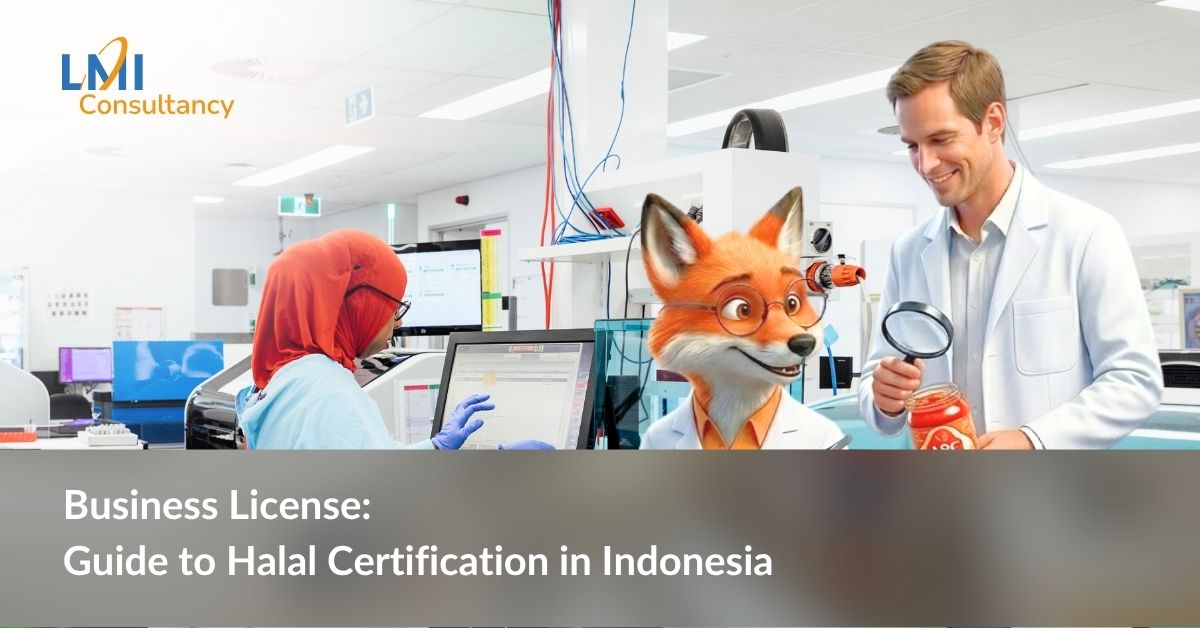
LPPOM MUI conducts audits and inspections to verify compliance with halal standards.
Fatwa Decision
The Indonesian Ulema Council reviews the audit results and issues a religious ruling on the product’s halal status.
Certification Issuance
BPJPH issues the halal certificate, allowing the product to be marketed with a halal label.
This process ensures that certification is both scientifically validated and religiously endorsed.
Halal Certification Requirements in Indonesia
To complete the certification process, businesses must prepare a comprehensive set of documents, including:
- Product formulation and ingredient details
- Supplier and raw material information
- Production flowcharts
- Quality control procedures
- Business licences and registration documents
Accurate documentation is critical, as discrepancies can delay certification or lead to rejection.
Certification Requirements
Beyond documentation, businesses must meet specific certification requirements, including:
- Compliance with halal standards across all operations
- Implementation of a halal assurance system
- Ongoing monitoring and reporting to maintain certification validity
Halal certification is not a one-time process. Companies must ensure continuous compliance to retain their certification status.
Obtain Halal Certification in Indonesia with LMI Consultancy
Navigating halal certification in Indonesia can be complex, particularly for foreign businesses unfamiliar with local regulations.
LMI Consultancy provides comprehensive support to help companies obtain halal certification, manage documentation, and ensure full compliance with Indonesian regulatory frameworks. From initial consultation to certification approval, their team offers tailored solutions designed to simplify market entry.
With expertise in legal, business, and regulatory processes, LMI Consultancy enables businesses to navigate Indonesia’s halal ecosystem efficiently, ensuring that products meet both legal and market expectations.